
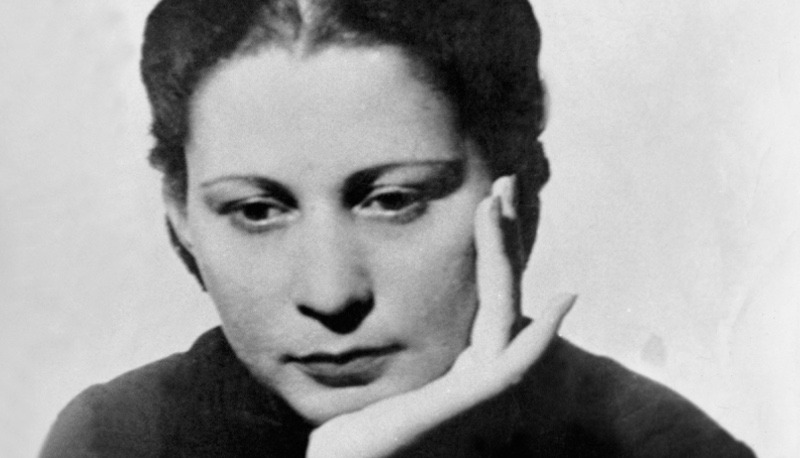
Julia de Burgos is a towering figure in Latin American literature, known as much for her lyrical mastery as for her defiant stance on Puerto Rican independence, civil rights, and feminism. Her origin story is one of profound intellect emerging from intense material struggle.
Roots in Carolina, PR
Julia de Burgos was born in 1914 in the Santa Cruz barrio of Carolina, Puerto Rico. She was the eldest of thirteen children, though sadly, six of her siblings died of malnutrition and disease during their childhood—a reality of the extreme poverty that gripped rural Puerto Rico at the time.
Despite these hardships, her father, Francisco Burgos Hans, was a well-read man who shared his love of literature and the Napoleonic classics with her. Her mother, Antonia García, provided the emotional resilience that would later characterize Julia’s poetry. Julia was a brilliant student, earning a scholarship to attend University High School in Río Piedras, which required her to travel a significant distance from her rural home, marking her first step toward the intellectual life of the city.
By the time Julia de Burgos was 19, she had graduated with a teaching degree from the University of Puerto Rico. She then became a teacher in the rural barrio of Naranjito at the age of 19. This role allowed her to see firsthand the systemic struggles of her students, which provided the raw emotional material for her early poetic works.
Julia De Burgos Wields Poetry
Julia began to writing poetry during a time when Puerto Rico was grappling with its colonial status around the 1930s. It wasn’t just a hobby; it was a survival mechanism and a primary tool for her work as a teacher and activist. Her poetry became a vehicle for her “dual” struggle: the fight for her island’s sovereignty and her personal fight for autonomy as a woman in a patriarchal society.
In 1938, she self-published her seminal work, Poema en veinte surcos (Poem in Twenty Furrows). It was revolutionary because it broke away from the traditional, romanticized “island poetry” of the era. Instead, she used her verses to attack social conventions.
One of her most famous poems, “A Julia de Burgos,” perfectly illustrates how she became the woman she was. In the poem, she creates a dialogue between two “Julias”:
- The Social Mask: The Julia who is a “social lie” and submissive to the whims of men and society.
- The True Self: The internal Julia—the poet, the wanderer, and the rebel who answers to no one but her own conscience.
Before she became a published icon, Julia worked for the Puerto Rican Emergency Relief Administration. One of her roles involved writing scripts and material for educational radio programs. This experience taught her how to craft language that was rhythmic and accessible to a wide audience. It helped her find a voice that could speak to the “common person,” bridging the gap between high-level academic poetry and the oral traditions of the Puerto Rican countryside.
Julia’s passion was so driving that she did not wait for the literary establishment to validate her. In 1937, she traveled across Puerto Rico, personally selling her first booklet, Cuaderno de poemas, to friends and strangers. This “grassroots” approach to poetry showed that her passion was rooted in a desire for direct connection with her people rather than just seeking fame within elite literary circles. By the time she published her most famous works, poetry had become her primary way of existing in a world she felt was designed to silence her.
Julia De Burgos Grows into Activism
While at the university, she became deeply involved with the Puerto Rican Nationalist Party. She was mentored by the party’s leader, Pedro Albizu Campos, and served as the Secretary of the Daughters of Freedom, the women’s branch of the party.
One of Julia’s most significant poems from her early activist rise is “Río Grande de Loíza.” Published in her 1938 collection, it serves as a powerful bridge between her deep love for the Puerto Rican landscape and her growing consciousness regarding colonial and social suffering.
In this poem, she speaks of a river that is not just a geographic feature of her childhood in Carolina. She uses the river as a metaphor that symbolizes the living, breathing entity that carries the collective history of her people.
She addresses the river as if it were a lover and a witness to her life. She describes herself as “the most lost piece of your childhood,” linking her personal identity to the land.
This poem solidified her role as a voice for the Antillean identity. By merging the “I” (the personal self) with the “We” (the island’s collective suffering), she moved beyond simple nature poetry into the realm of social protest. It established the river as her most enduring metaphor: a force that is constantly moving, crossing boundaries, and refusing to be contained—much like her own political and personal spirit.
Julia De Burgos Becomes a Threat to Colonialists
The period of Julia de Burgos’s most direct threat to the status quo occurred during the mid-to-late 1930s. During this time, the island was under intense social and political tension, and Julia used her visibility to challenge both American colonial administration and the local social hierarchy.
By 1936, Julia was no longer just writing about personal feelings; she was writing about sovereignty. She became a “threat” through her role as a writer and speaker for the Nationalists. Her writing during this era was dangerous to colonial authorities because it did two things simultaneously:
- Mobilization of Women: As the Secretary of the Hijas de la Libertad (Daughters of Freedom), she organized women into a political force. At a time when women were expected to be silent and domestic, Julia was on the front lines, teaching that the liberation of the island and the liberation of women were the same struggle.
- The 1936 “Petition of the People”: Following the assassination of two Nationalist leaders and the subsequent arrest of Pedro Albizu Campos, Julia’s public presence intensified. She gave powerful speeches and wrote essays that framed the colonial relationship as a form of spiritual and physical death for Puerto Ricans.
Her 1938 book, Poema en veinte surcos, acted as a manifesto. Colonialism relies on the “civilizing” myth—the idea that the colonized are better off under another’s rule. Julia’s work systematically dismantled this.
In poems like “Río Grande de Loíza,” she claimed ownership of the island’s geography through language. This was a direct challenge to the legal and economic ownership held by foreign sugar corporations.
By attacking the “social lie” in her work, she was encouraging a generation of Puerto Ricans to stop performing the role of the “docile colonial subject.” To the authorities, a population that refuses to be submissive is the ultimate threat.
Julia de Burgos became a legend because she refused to separate her art from her politics. She lived as a “river without a guide,” a recurring theme in her work that reflected her refusal to be constrained by borders, gender roles, or colonial expectations.
Julia De Burgos is Isolated to Death
The 1937 Ponce Massacre, where police fired on a peaceful Nationalist march, was a turning point. Julia’s work during the aftermath became increasingly radical. She was blacklisted from various teaching and government positions because of her refusal to renounce her pro-independence views. The colonial administration recognized that her mastery of the Spanish language and her ability to evoke intense national pride made her more effective than any armed militant; she was winning the “battle of the minds.”
Because of her activism, she was under the constant watch of the authorities. This pressure, combined with the difficulty of finding work as a known “subversive,” contributed to her decision to leave Puerto Rico in 1940. Even in exile, her work continued to circulate back to the island, serving as a blueprint for the “Generación del 45” and future activists who sought to define a Puerto Rican identity independent of external control.
Being under constant surveillance brought Julia to a state of isolation. She came to the conclusion that she had to flee from Puerto Rico to preserve her well-being. She first migrated to Cuba before she moved out to New York City. When she arrived in New York in 1940, she was a celebrated intellectual in the Caribbean, but in the United States, she was reduced to an anonymous, struggling immigrant.
While in New York City, Julia de Burgos was targeted by the colonialist authorities. The authorities formulated plans to isolate and blacklist Julia from opportunities. These plans made it nearly impossible for her to secure stable, professional employment despite her brilliant linguistic abilities. She was forced into menial labor, including working in a factory and as a clerk. Over time, the surveillance and isolation led to devastating physical and mental health declining effects on Julia. Julia turned to alcoholism to cope with the internal pain of disconnection from community and loved ones along with the hardships of being a single, poor migrant woman during the era. Her health specifically deteriorated quickly due to cirrhosis and respiratory issues along with the pain of deep alienation.
In her final weeks, she was a ghost in the city. On July 6, 1953, she collapsed on a sidewalk in East Harlem. She was not carrying identification when she died; so she was processed as an anonymous Jane Doe. Julia was initially buried in a potter’s field on Hart Island—a public cemetery for the indigent and unidentified. It was only after her friends and family in Puerto Rico grew concerned about her silence and began a frantic search that her body was identified through fingerprints. Her remains were eventually exhumed and returned to Carolina, Puerto Rico, fulfilling the national mourning she had been denied in life.
Julia de Burgos was a brave, passionate soul. She was a fierce and honorable opponent to colonial opposition in an era when women were expected to be demure and domestic. Though she passed away in a state of profound loneliness, her spirit lives on in with the natives of Puerto Rico. She will always be remembered for the powerful revolutionary force that she made of herself in this world. It’s important to realize that she passed away only 73 years ago from this year. That’s less than 100 years since the colonialist rule was able to silently target and oppress this brilliant woman to such a tight degree.
The U.S. government’s surveillance of Puerto Rican independentistas during Julia’s era—later formalized under policies like COINTELPRO—created an atmosphere of fear. This systemic marginalization ensured that a woman who once led political rallies was kept at the fringes of economic survival. Imagine what the authorities are able to do to anyone else with the technology that exists in 2026. Nobody is too common to be a silent target. Julia’s life made this clear though her only “crime” was verbalizing the pain she felt through systematic oppression.